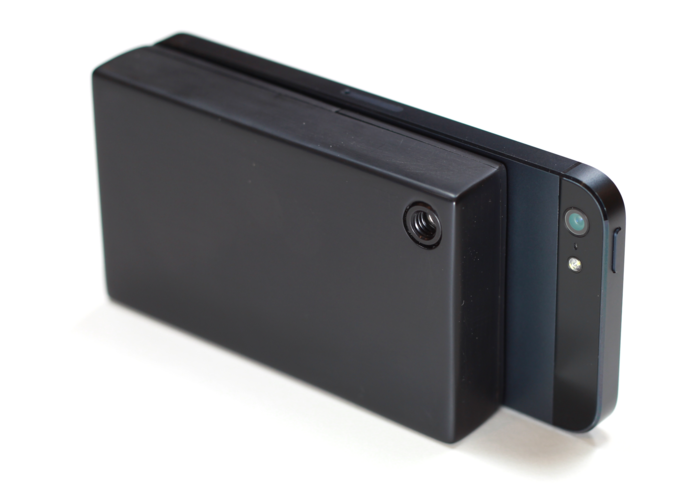
The IR-Blue is an affordable thermal imaging accessory for iPhone and Android Devices. See the world in a new way.
If you missed out on the IR-Blue Kickstarter you can still get one at store.rhworkshop.com
Latest Updates
Stretch Goal Reached! The kit and the assembled IR-Blue will have both Bluetooth 2 and Bluetooth 4 built in. The IR-Blue will work with iPhone and Android Devices.
I have a 100 year old house that can be drafty and hard to heat in the winter. I have been wanting a thermal imaging camera to help find leaks ever since we bought this house. The cheapest one I could find was $1,500 so I finally just made my own. This is the IR-Blue.
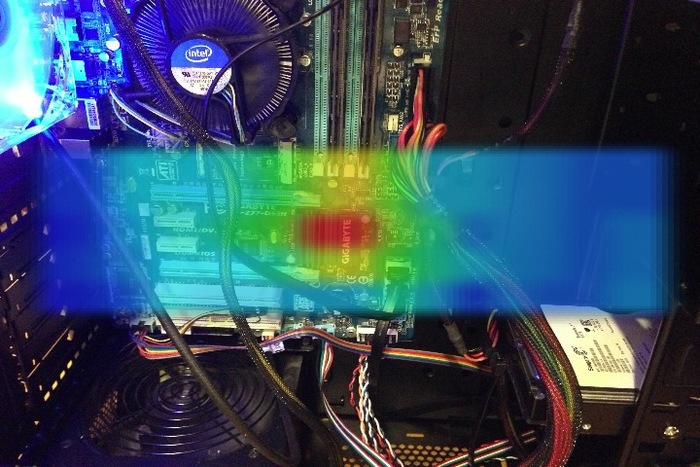
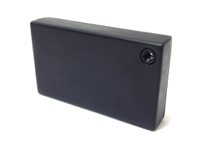
The IR-Blue lets you see the temperature of things around you. It uses a 64 zone non-contact InfraRed sensor array to read the temperature of what you are viewing. The IR-Blue connects using Bluetooth to your iPhone or Android device to show the temperature readings as colors on the screen.
The IR-Blue supports Bluetooth 2 and Bluetooth 4 BLE. It works with the iPhone 4S, 5, the New iPads and the 5th gen iPod Touch. It also works with Android 2.3 and newer devices with at least 480 x 800 resolution displays. (Bluetooth 4.0 is not officially supported by Android yet, when the bluetooth 4.0 drivers are stable we will support it for Android also.)
Gizmodo - "Awesome Thermal Imager Turns Your iPhone or Android Into the Predator’s Eyes"
Engadget - "The secret to turning smartphones into super-cheap thermal imaging hardware"
PetaPixel - "Instantly turns the iPhone into a cheap thermal imaging camera"
HackADay - "Perfect for looking for cold drafts in an old house"
Hacked Gadgets - "I can see many home owners purchasing one to see where their insulation could be improved"
Phone Arena - "Here's an invention that you don't see every day"
Apps
The Apps for iPhone and Android will be available in the Apple App Store and the Google Play Store for free.
This is an Open Source Hardware project. The source code for iPhone, the firmware and Eagle design files for for the Bluetooth 4 version are available now at github.com/RHWorkshop/. The Android files are still being revised and will be available soon.
Rewards
Shipping within the US is included, shipping outside the US is $5 for the PCB and $12 for everything else.
∞∞∞∞∞∞∞∞∞∞∞∞∞∞∞∞∞∞∞∞∞∞∞∞∞∞∞∞∞∞∞∞∞∞∞∞∞∞∞∞∞∞∞∞∞∞∞
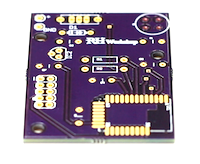
PCB ONLY - A Printed Circuit Board for the IR-Blue. For this reward level you get a bare Printed Circuit Board for the Bluetooth 4 model, the Bluetooth 2 model or the Dual Mode Model. This does not include a case or any other parts but it does include a detailed Bill of Materiels so you can source your own parts. You will receive a survey at the end of the Kickstarter and you may then choose which of the above items you prefer.
∞∞∞∞∞∞∞∞∞∞∞∞∞∞∞∞∞∞∞∞∞∞∞∞∞∞∞∞∞∞∞∞∞∞∞∞∞∞∞∞∞∞∞∞∞∞∞
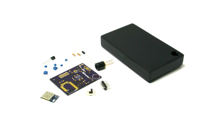
BUILD IT YOURSELF KIT - Everything you need to build an IR-Blue. All parts are through hole and easy to solder except the Bluetooth module which will already be soldered to the PCB. The firmware will already be loaded on the module. ($160 estimated retail value)
∞∞∞∞∞∞∞∞∞∞∞∞∞∞∞∞∞∞∞∞∞∞∞∞∞∞∞∞∞∞∞∞∞∞∞∞∞∞∞∞∞∞∞∞∞∞∞
IR-BLUE FULLY ASSEMBLED - Fully assembled and tested IR-Blue. You are ready to start seeing the world in far infrared. ($195 estimated retail value)
∞∞∞∞∞∞∞∞∞∞∞∞∞∞∞∞∞∞∞∞∞∞∞∞∞∞∞∞∞∞∞∞∞∞∞∞∞∞∞∞∞∞∞∞∞∞∞
RH Workshop
RH Workshop LLC is a technology research, design and product development organization. We specialize in making advanced technologies more available and affordable through open source.
Andy Rawson has been a technology industry professional for 15+ years and is an open source hardware developer. He is the founder of RH Workshop. Andy has created and shared the design of a simplified and affordable laser stereolithography 3D printer, a Delta robot experimentation kit and several other open source hardware projects.
Marcel Damhuis is a long time industrial controls programmer (PLC and Scada) from the Netherlands. He has 30+ years experience with designing and building electronics, programming embedded systems (AVR, PIC, ARM) as a hobbyist. Marcel is always tinkering with mechanical or electronic stuff in his free time.
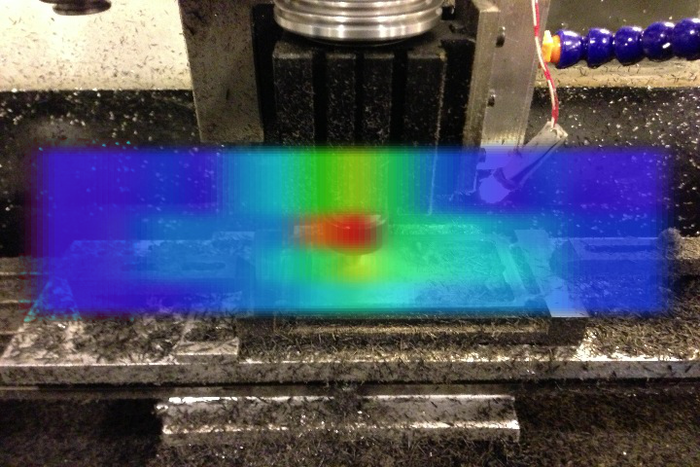
The spindle on the Mill is hot.
Production
Each stage of production will be done with local businesses. The printed circuit boards (PCBs) will be made in Illinois or Colorado. The injection molded cases will be made in Minnesota, the PCB assembly for the IR-Blue will be done in Illinois. The cost of manufacturing a device like this in the US is a little more than overseas but not as much as you may think. Manufacturing in the US allows us to be on hand and involved in each step of production.
Risks and challenges
The IR-Blue is working and nearly production ready. We are working with a local manufacturing company that has the resources and ability to scale to whatever volume we need. The main risk for this project is unforeseen delays. The IR temperature sensor used in the IR-Blue is still new and not in wide distribution. The lead time from the manufacturer of this sensor, Melexis, is 20 weeks. The delivery dates for the rewards are based on this time plus the time needed to pack and ship the kits and the time needed for assembly and packaging of the complete IR-Blue. Most of the work will be done before the sensors arrive but any delays will be communicated at every step along the way.
A low-cost, open source USB 3.0 Software Defined Radio platform with many examples and tutorials to help you experiment with RF.
If you missed the Kickstarter and are wondering about general availability, check out http://nuand.com/order.php
It's the last day for our project. Thank you everyone for the amazing support!
UPDATE: Source code is now available on Github ( https://github.com/Nuand/bladeRF )
UPDATE: Production bladeRF units will ship with removable-cap RF shields.
What is a Software Defined Radio?
As wireless technologies become ubiquitous, Software Defined Radios (SDR) are gaining popularity. Unlike most radios transceivers found in phones, WiFi devices, remote controls, etc. that can only communicate using specific wireless modulation schemes, Software Defined Radios are completely software based, which allows them to communicate with devices across the RF spectrum. Besides interacting with existing wireless devices, SDRs allow for the development of new wireless systems and protocols using intuitive software tools and APIs.
An open education
bladeRF is a platform designed to enable a community of hobbyists, and professionals to explore and experiment with the multidisciplinary facets of RF communication. By providing source code, thorough documentation, easy to grasp tutorials, and a place for open discussion, modern radio systems will be demystified by covering everything from the RF, analog, and digital hardware design to the firmware running on the ARM MCU and FPGA to Linux kernel device drivers.
A Software Defined Radio platform should not end at the hardware, which is why there is such a strong emphasis on documentation and tutorials. Starting with basic radio architecture and spanning into modulation techniques, high throughput USB Linux kernel driver design, basic telecommunication coding schemes, and MIMO, the platform aims to be the perfect tool for learning modern software radio design.
Powerful and portable
The bladeRF is a fully bus powered device that does not need to be plugged into an outlet for normal operation. For users who wish to do host processing, USB 3.0 SuperSpeed is the ideal high throughput, low latency interface that brings the PC closer to the antenna than ever before. For those looking for a standalone solution, the bladeRF accepts a 5V DC input and operates autonomously using the FPGA for signal processing.
Professional quality, amateur price
Professionally designed and verified, bladeRF prototypes were inspected through X-Ray superimposed layouts, and put through rigorous physical and electrical stress tests to ensure high quality mass production builds. Ultimately, this makes the bladeRF a high quality, low-cost Software Defined Radio capable of capturing 40MHz 12-bit full duplex quadrature samples in realtime.
A full solution in a single package
Out of the box the bladeRF can tune from 300MHz to 3.8GHz without the need for extra boards. The current open source drivers provide support for GNURadio among other things, allowing the bladeRF to be placed into immediate use. This gives the bladeRF the flexibility to act as a custom RF modem, a GSM and LTE picocell, a GPS receiver, an ATSC transmitter or a combination Bluetooth/WiFi client without the need for any expansion cards.
Total control
The bladeRF was designed from the beginning to be highly integrated and fully reprogrammable. This means more than just providing source code to modify the host software. The USB 3.0 (Cypress FX3) microcontroller firmware is available to modify, as is the Altera Cyclone IV FPGA VHDL, bringing developers as close to the RF transceiver as possible.
All the pieces were written, designed, and documented to not only teach but encourage modification at each level from the host software all the way down to the FPGA logic. The bladeRF allows for the USB 3.0 microcontroller and FPGA to be reprogrammed through JTAG or directly via USB. With freely available tools and development suites provided by the hardware vendors, the bladeRF's FPGA and USB 3.0 microcontroller firmware can be easily modified.
More than just RF
The functionality and openness of the bladeRF encourages people to use the platform as more than just an RF transceiver. The FPGA can act as an accelerator of any type from turbo decoding to video transcoding. The bladeRF can be easily adapted for use in custom embedded projects due to its low power requirements and the flexibility offered by the FPGA, FX3, and expansion port. For inquisitive developers, the platform can be used as a USB 3.0 and FPGA development kit.
Technical specifications:
The bladeRF occupying a full 28MHz channel
Functional prototypes
We have a set of fully functional prototypes that we have been using to verify the design and finish the driver development.
A stack of prototypes
The bladeRF was very verified early on to work well with embedded devices such as a Raspberry Pi. The highly efficient power architecture makes the bladeRF the perfect embedded SDR.
bladeRF connected to a Raspberry Pi
The prototypes have been verified electrically and physically to ensure that the design is indeed ready for mass production. We have gone as far as X-Raying the finest pitch components to inspect the quality of the PCBs and of the assembly.
The USB 3.0 transceiver's 0.8mm package could have caused manufacturability issues, however by inspecting it with the X-Ray machine the design was proved to be correct. It is this attention to detail that will ensure high quality bladeRFs are shipped to backers.
Who should purchase a bladeRF?
The bladeRF is meant for new as well as experienced wireless developers. With drivers for many platforms and GNURadio support, the bladeRF is an ideal drop-in replacement for experienced developers looking for a highly capable and cost effective SDR.
The bladeRF is also meant for hobbyists and enthusiasts looking to learn about modern radios. By providing examples and tutorials along with open source support and many of the design files, the bladeRF provides an unparalleled guide to wireless development, especially for newcomers.
Who we are...
We are a group of software, hardware, and RF engineers dedicated to making understanding and experimenting with RF more accessible to hobbyists and enthusiasts by creating low-cost professional grade equipment. Drawing from years of industry experience, and many months of work we've put together the bladeRF platform. Most importantly, we are active developers with a strong desire to see our platform bring RF experimentation to a whole new level.
Make sure to check out our blog at http://nuand.com/blog/ or visit us on IRC in #bladeRF on Freenode.
Risks and challenges
Due to the nature of test equipment, we have sought legal advice to ensure that we are in compliance with American and international regulatory bodies.
As with any other hardware project, our delivery dates can be adversely affected by component inventory. To avoid such surprises during a mass production run, only parts with healthy stock estimates were selected during the design phase of the bladeRF. Additionally, we have approached and remained in contact with many component distributors about their inventory.
A successful mass production run has been carefully planned since the very beginning of the project. We selected a PCB manufacturer that has experience with prototype and mass production runs for boards that are similar to ours. By using the same manufacturer all the way through, we were able to correct and avoid issues that would affect mass production runs early on.
As of now our delivery dates are based on worst case scenario lead times with additional headroom for error for all our parts. Although we won't go as far as promising earlier delivery dates, there exists a good chance of it happening.
To further ensure the quality of shipped bladeRFs, we will run an extensive physical and electrical tests to verify each device. Additionally, each bladeRF's VCTCXO will be individually calibrated to a near perfect 38.4MHz frequency using a very high fidelity frequency counter.
Smart technology meets brewing. Now anyone can brew high quality craft beers using their smartphone.
You can still get a Brewbot. Head over to www.brewbot.io for more information or to place an pre-order.
High resolution photos for press download here. For press inquiries, please contact brewing@brewbot.io. Follow Brewbot on Twitter @brewbot and on Facebook.
-----
“Science has just created a way to brew beer with an iPhone.” - Fast Company
“With Brewbot you don't have to worry about all the tedious parts of brewing. It takes care of water measurements, timing, and temperatures so you can focus on your recipe and ingredients.” - Uncrate
“It’s designed to look good, take up a minimum of space and eliminate as much possibility of error as it can to make home brewing easy.” - TechCrunch
“Brewbot has a sleek design, doesn’t take up too much space like the typical brewing equipment.” - PSFK
“The Brewbot is just the latest example of human ingenuity applied to the enjoyment of the frosty beverage.” - Yahoo News
“Sleek enough to grace the kitchen rather than hide in the basement.” - New Scientist
-----
UPDATE #6: Announcing Brewbot Core!We are excited to extend the Brewbot community and put this technology into the hands of others. Check out our new rewards:Brewbot Core and Brewbot Core + Starter Kit
-----
Get ready to brew amazing beers at home, the office… anywhere. We've made it simple and with your support we can make it available to everyone.
At Brewbot, we are interested in the possibilities connected devices can offer and how this technology can influence the future of brewing to make it consistent, repeatable, and within the reaches of anybody.
What is it?
Brewbot is a smart brewing appliance that you can control and monitor with your smartphone. Never brewed? No problem. Our goal was to make an easy-to-use, controlled environment that is aesthetically pleasing, and frees up brewers to focus on the recipes. You don't need to know anything about brewing to get started. You are guided through the process from beginning to end.
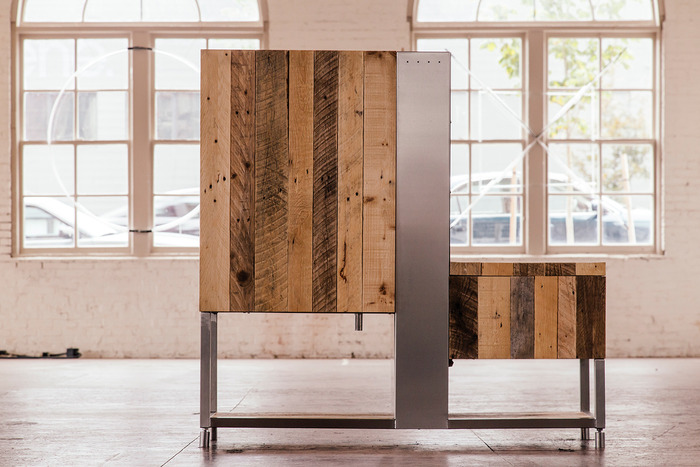
Brewbot in Bailey's Taproom, Portland.
Why did we build it?
Brewing can be a complicated affair. The process can be daunting for anyone who is considering taking their passion for craft beer that little bit further. When we embarked on our journey into the world of brewing we made many costly mistakes. We found it could be laborious and time consuming — we were spending more time looking at timers and thermometers or fixing our setup than thinking about recipes and ingredients.
We noticed many of the inefficiencies and problems that can arise when brewing manually. With a lot of work, we were able to brew amazing beers, but they were often difficult to replicate. We saw an opportunity as designers and developers to use our skills to build a better way to brew and ultimately open up brewing to everyone.
Brewing for everyone.
Intelligent technology makes it easy to have consistently high quality craft beer at home, work or events. With Brewbot, you are the craft brewer; discovering new recipes, tweaking ingredients and experimenting with flavors. You can now have your very own brewery… and you are the master brewer.
We've been hard at work and, with your help, we are ready to take Brewbot into production. By supporting this project you'll be the first to get your hands on this smart brewing device.
Our journey to date.
We've come a long way since first brainstorming this idea.
Exploring form.
We approached this problem to design and engineer a simple solution. As brewers, we understood what we needed and as a result we have been able to build a product that not only works, but looks great too.
Many other brewing setups take up large amounts of room. They are usually unappealing and often tucked away, out of sight. Our aim is to bring brewing out of the garage and into the home.
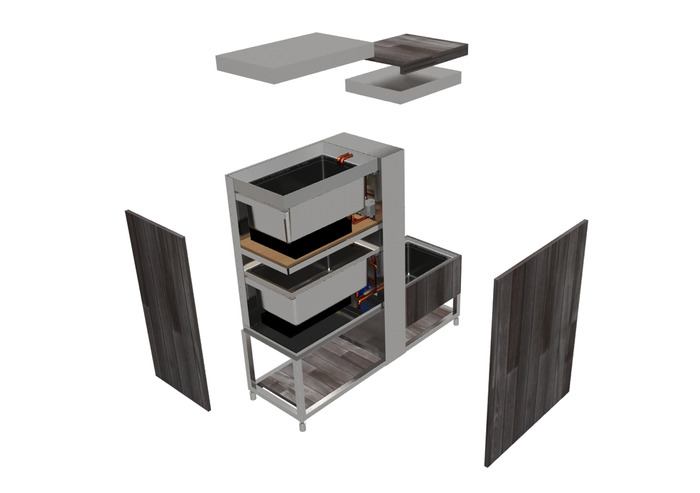
Render of our pre-production design.
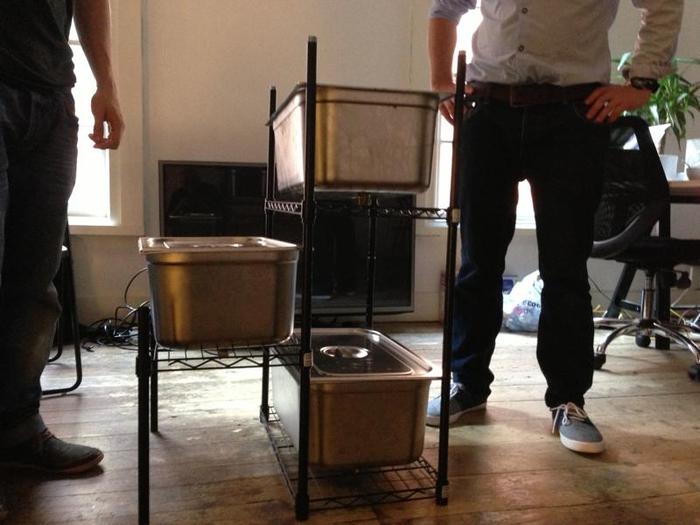
As most home-brewers typically do, we started our journey into brewing using plastic containers and pipes. As we iterated on our setup we were constantly optimizing and went from plastic containers to stainless steel. Because of the cost we used copper piping, but it is our aim to move to a stainless steel design.
We researched what was readily available in the catering industry and strived to use as many off-the-shelf components we could.
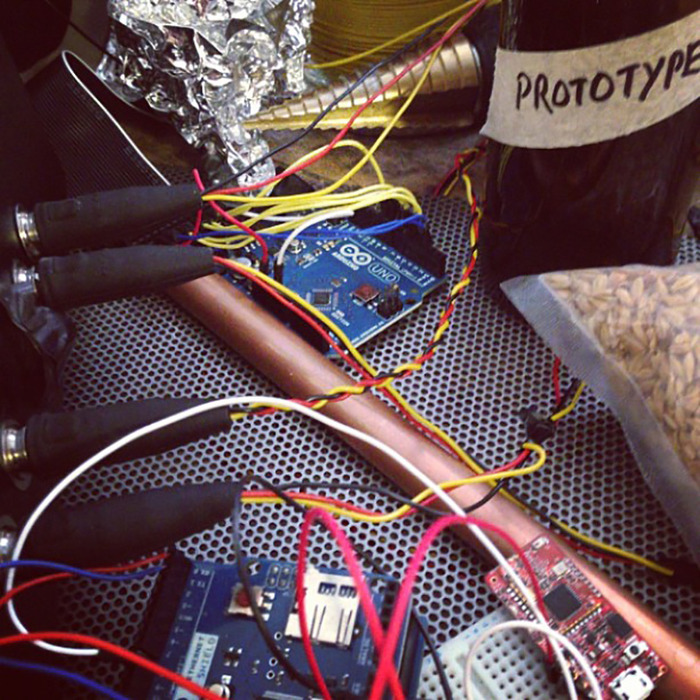
Using Arduino allowed us to rapidly prototype and iterate on different methods and configurations of software and hardware, giving us flexibility to focus on building Brewbot, and automating the brewing process. Arduino is a well-proven electronic prototyping platform and we were able to leverage the vast community and resources that it offers.
Prototyping
Using our extensive knowledge in iOS we rapidly prototyped a manually controlled interface, iterating on the design and refining the steps.
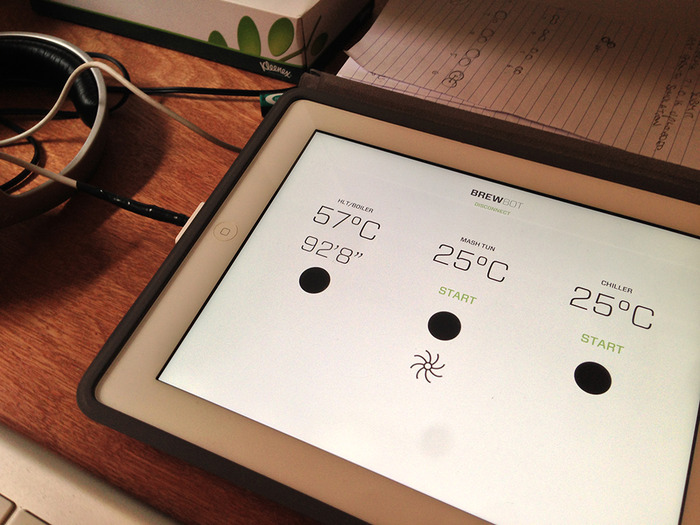
An early iPad app for monitoring temperatures and times, and operating valves and pumps manually.
Our current prototype uses copper piping but with your help we can use stainless steel with disconnects to help make Brewbot a cleaner system that lasts longer.
Where we're at now.
Brewbot is beginning to come to life. We have built an amazing prototype and we're almost there. We know what we have to do and what we'd like to improve. On the software side, we are in the process of refining our user interface and adding features.
We are so passionate about this project that we have moved the whole team to Portland, Oregon as it is the micro-brewery capital of America. We are spending a month on the West Coast sourcing fabricators, materials and components to make Brewbot happen.
How does it work?
The whole process is pretty simple. Buy your ingredients from a local brew-shop or online, setup your recipe in the app and connect your iPhone to Brewbot.
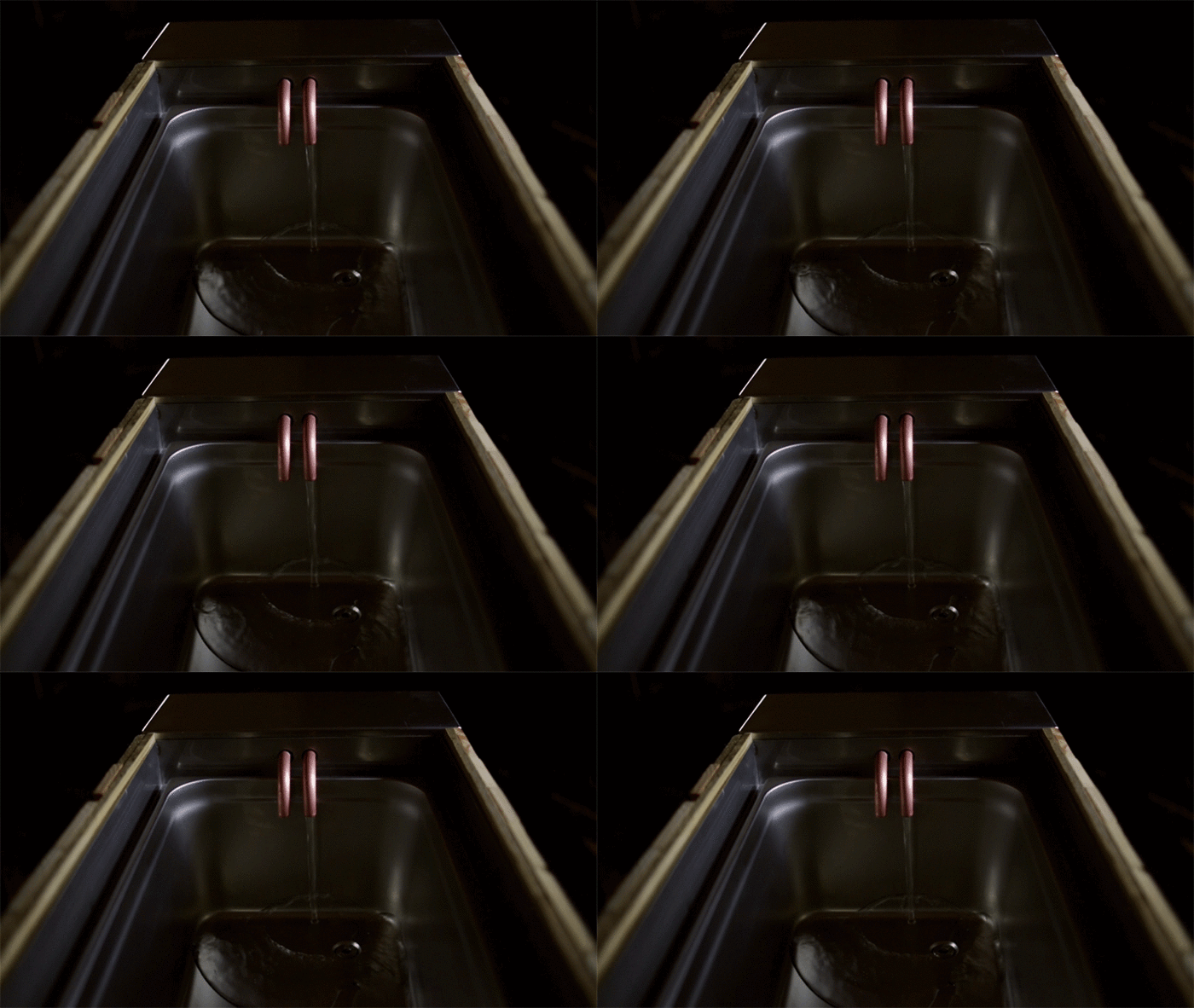
Create or choose a recipe to begin brewing. Tap ‘Start Brew’ to automatically add the exact amount of water to be heated. Once heated the valve in the container releases and the water runs into the mashtun, where the grain lies.
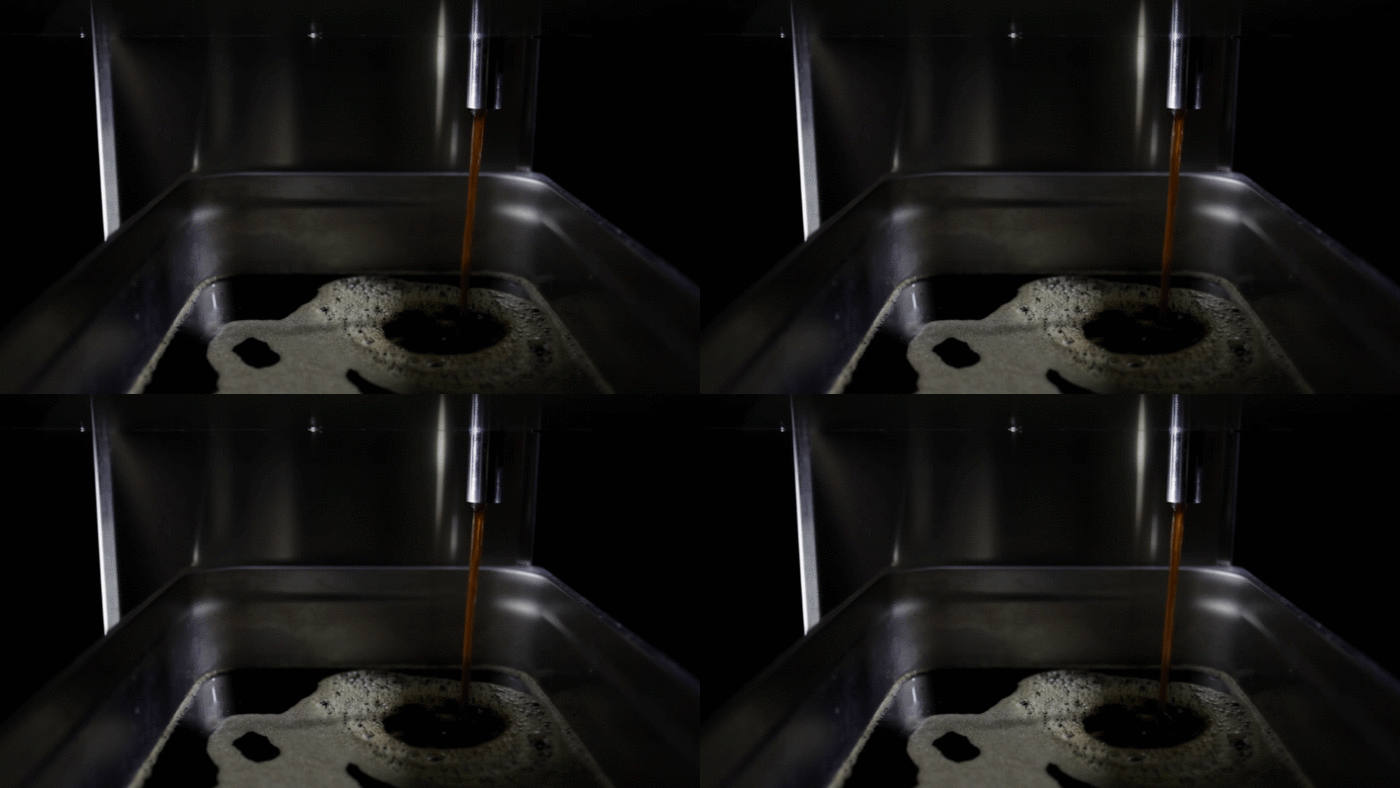
At the end of the process the wort filters through the plate cooler, cooling it from 100°C to under 22°C, now ready to ferment.
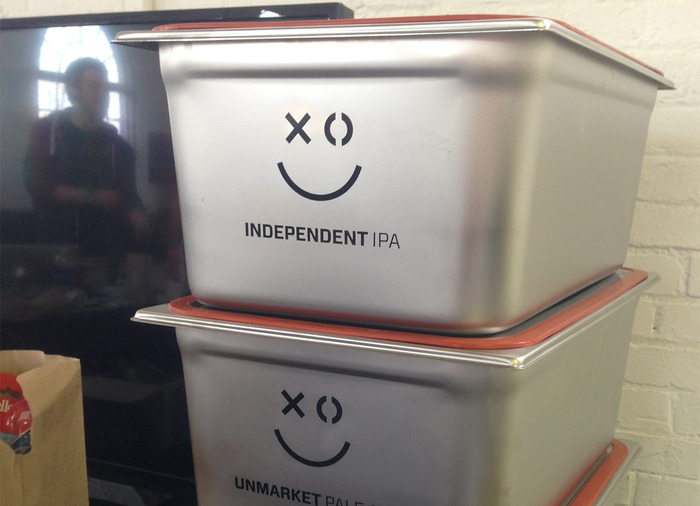
We have used stainless steel vessels as fermentation tanks. They are sealed and opaque as hops are light sensitive. Light (specifically UV rays) will skunk the beer and produce off-flavors.
We have built a recipe platform right into the app, allowing brewers to add and tweak recipes.
Smartphone connectivity
Brewbot currently talks to your iPhone via Bluetooth, giving you all the required feedback you need, from adding the grain on brew day to how long you have to wait for the brew to ferment.
Accurate measurements
Based on your recipe Brewbot enters the exact amount of water required for the brew. This can be adjusted using the app.
Sensor technology
We have used temperature sensors, load sensors, and flow meters to ensure you understand what is happening from start to finish. These sensors assist with the automation.
Optimal brewing techniques
You can brew up to 20 litres (or just over 5 gallons) of beer. Brewbot is flexible and allows you to brew using no-sparge and batch sparging techniques which means it recirculates the water over the grain bed and cuts the brew time.
Better beer for less
Craft beer can be expensive but now everyone has the power to brew beer themselves for as little as 26p/42¢ for a 330ml/12oz bottle.
Custom facades
We are offering a number of facades and we have options that can be branded so it can be customized to fit in with your home, office, restaurant or bar. The possibilities are endless.
Brewbot prototype and app
Compatibility:
Our skills as designers and developers align most suitably to iOS, that's why we made the decision to develop our prototype for iPhone.
Working on iPhone allowed us to more easily pull together all the pieces in order to automate the brewing process and achieve our goals for the app both technically and visually. Support of Bluetooth LE in the iPhone 4S and iPhone 5 gave what we immediately needed in development of our prototypes and having support on Android and other platforms would be an aim of ours beyond our initial Kickstarter.
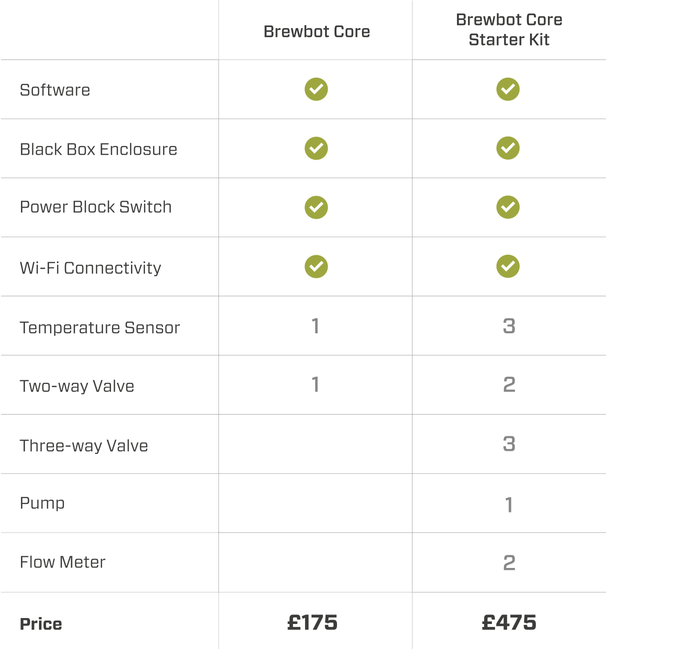
Brewbot Core [update]
We have received a lot of feedback from brewers who already have a system in place but wish to monitor, control, and/or automate it, like Brewbot. We realise we can offer this as a product to offer the technology that makes Brewbot work to others. Community is important to us so we wanted to open this up.
Brewbot Core is unit that offers an extendable collection of the sensors and valves, fully customisable brew processes (even double sparge and step mashing), custom mapping of sensors to various outputs, have the full power of our software including scheduling system, Wi-Fi connectivity, recipe management system, cleaning modes, integration with other systems via our API, and also access to future products, such as our TV dashboard and Android app.
We've added two new pledges; Brewbot Core and Brewbot Core + Starter Kit.
Features of Brewbot Core:
Real-time notifications
Built-in calendar support. Get notified when the boil is ready, a strike temperature is hit, when it’s time to dry hop, when it’s time to bottle.
Wi-Fi connectivity
A Wi-Fi base station that can be standalone or connect your brewery to an existing network. Connect to your Android or iOS device.
Recipe management
Send recipe data to your smart brewery format, or input via the app. Comes with the same recipe tweaking ability as Brewbot.
Custom brew processes
Setup Brewbot Core to your desired brew process, timings, sparge technique, mashing technique. Brewbot Core offers full flexibility to suit your needs.
Sensor mapping
Add your temperature and flow sensors and setup what they do and control. e.g. Set temperature sensor one to open a two-way valve.
Manual control
Based on the inputs and outputs defined you will get a custom interface to manually control outputs and monitor input sensors.
Cleaning modes
Several preset functions that can be used to rinse your system out.
Extendable
Want a custom sensor or add even more? Brewbot Core can be upgraded through connections and software.
Why Kickstarter?
We’ve created a fully functional prototype and it has proven extremely effective. We have spent the last several months putting it through its paces and have brewed a lot of beer along the way.
We've explored lots of ways to bring Brewbot to life but the only way we can see it getting into the hands of others is to use Kickstarter. We want to make it more affordable and the only way we can do that is by manufacturing in large numbers.
So far we have been able to fund the development of the project but now we need your help to take the product further. We believe if Brewbot existed we could empower discerning amateurs, home-brewers, and breweries to become better.
Global availability:
We are currently focusing our efforts on the UK, Ireland, Australia, and US. If we meet our goal we guarantee seamless delivery in these countries, we will endeavor to achieve the necessary certifications for other countries but if we can't we will refund backers in the countries we can't deliver to.
Shipping and delivery:
If we get funded we want to use our funds to optimize the weight of Brewbot to keep shipping costs as low as possible. Brewbot is a sizable, ready-constructed unit and as such currently costs £100/$160 to ship within the UK and it would be a similar cost in the US. We want to reduce this cost when we go into production by sourcing fabricators in the UK and the US. We will be in touch when our project ends with individual shipping prices for your country i.e. UK and Ireland, EU, US, Canada, or Australia.
How will the project funds be used?
We have a real working prototype, but there's still a lot to do. With your support we can finish the first production-run of Brewbot and get it out into the world. Your backing will help fund:
Sourcing components and materials
We are currently using copper for piping but we want to use stainless steel. Stainless steel doesn't corrode or oxidize and can be used with more cleaning products than copper can.
Electronics - we are currently using Arduino but we are hoping to use our own micro-controller to optimize the threading. We need to optimize the product for both the UK and US voltage systems.
Software development
The current Brewbot app needs refined and we will require your help to make this happen. Whilst the app is currently iPhone-based we want to offer a cohesive visual experience across multiple platforms and devices.
If you decide to help us you'll play an integral part in starting a revolution in home-brewing. Every person backing us makes the difference. We're looking forward to seeing what you can do.
Who are we?
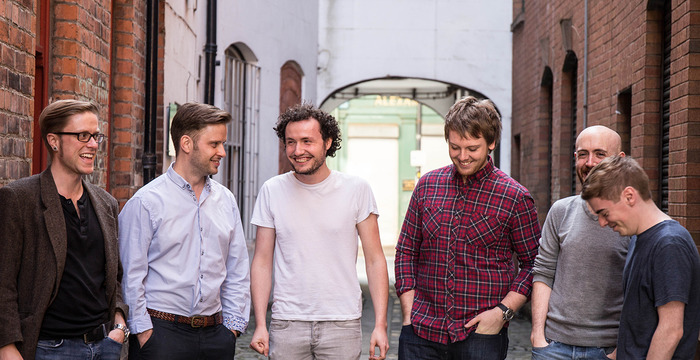
We are Cargo, a multidisciplinary team of designers and developers based in Belfast, Northern Ireland. We come from different backgrounds but we all share the same passion for brewing.
We have designed and developed over 70 mobile applications to date but we made the decision to focus on our own product, and this is why we've put all of our efforts and energies into Brewbot.
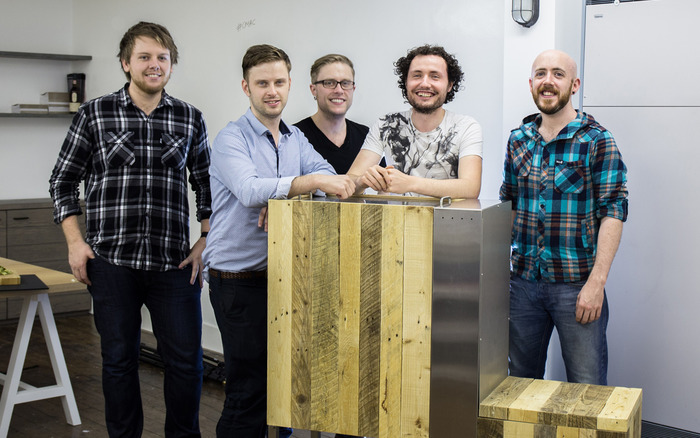
From left to right: Niall, Chris, Kieran, Aaron, Jonny, and Ali.
Partners
We have partnered with Caroline and Nelson Santos who are the founders of Mette, a creative consultancy who specialise in contemporary products and environments for cooking and living, to assist with the product design. They have designed products for Jamie Oliver, Tesco, and 100% Design.
We will be teaming up with James Lamb who was one of the very first design engineers at Dyson Appliances. He has designed a long list of products for companies such as British Telecom, Johnson & Johnson, GE, Gillette, and P&G.
Along the way we've had the help and support of Dr George Cathcart who is the master brewer at Sheelin Brewery.
What do our rewards look like?
We wanted to bring the same personality to our rewards that we bring to our app and appliance.
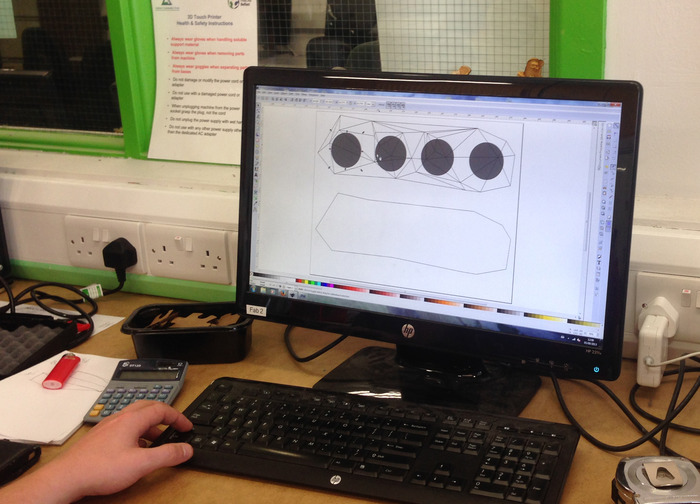
Prototyping our beer paddle at FabLab Belfast.
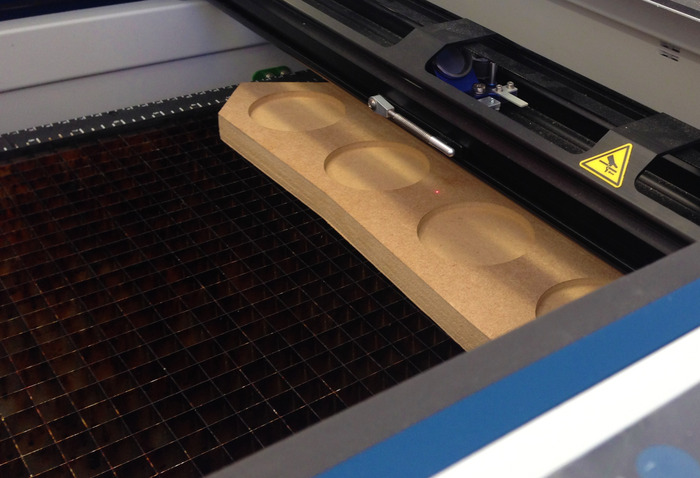
Laser-etching our beer paddle prototype.
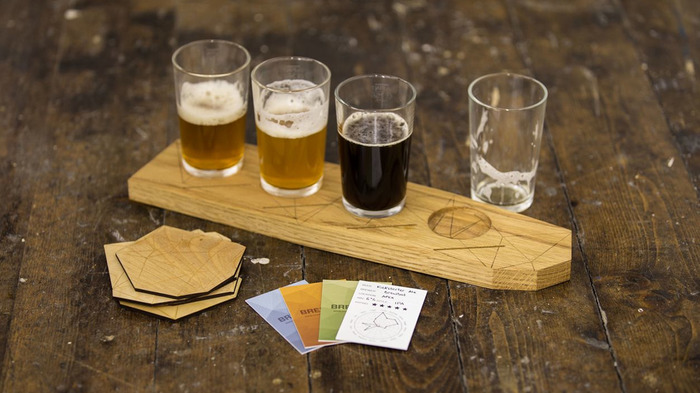
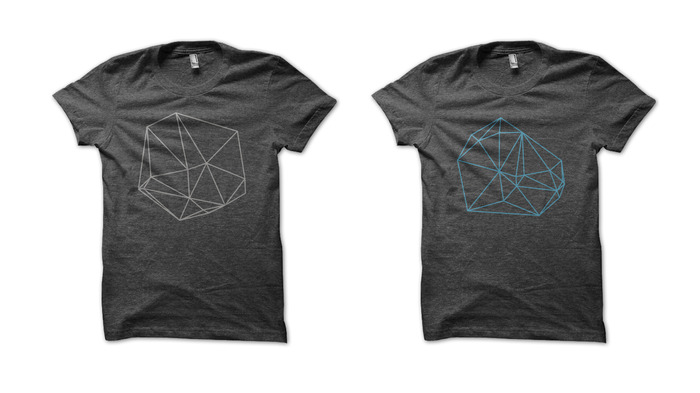
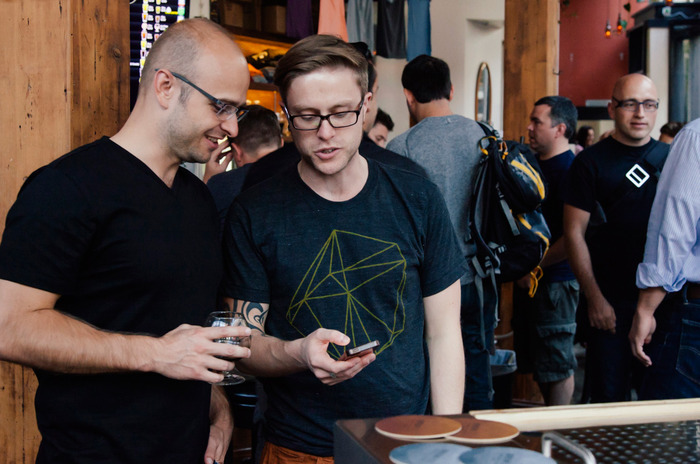
Inspired by the visualisations in the app, we have created some beautiful generative objects. Each of the rewards are completely unique and have been generated based on our triangulation design.
We wanted to make something just for you because you are helping us bring our dream to life.
Beer paddle and glasses, coasters, and tasting cards.
Example of the Brewbot T-shirts.
Niall sporting a Brewbot T-shirt.
Special thanks to:
We would like to thank everyone who helped and supported us along the way, without you we wouldn't be here:
Caroline and NelsonSantos at Mette, George Cathcart at Sheelin Brewery, Andy McMillan and Andy Baio for going above and beyond to help us in Portland and for creating XOXO which inspired us to pursue this idea, Paddy and Adam at FabLabBelfast, MartyStalker and PaulSearle for video, FillyCampbell and SimonMills for photography, Warp and Woof for our soundtrack, Conor Midgely, Robin Price, Paul Lay, Llinos Griffiths, Miguel Ortiz, Baileys Taproom, Black Box, Hudson Bar, Max Temkin for all of his support, and everyone who encouraged us along the way.
Team Brewbot
Risks and challenges
We have built functional prototypes already and are confident we will be able to produce an amazing product, however, with all hardware projects, there is always a risk when it comes to getting a prototype production-ready.
We have tried to use off-the-shelf parts where possible, all of which already have CE marking which mitigates the risk in safety.
We appreciate your support and we are excited to have you join us in our journey to share the power of brewing to the world.